What the Solar Radiation Event Revealed About Tech Ops Event Management
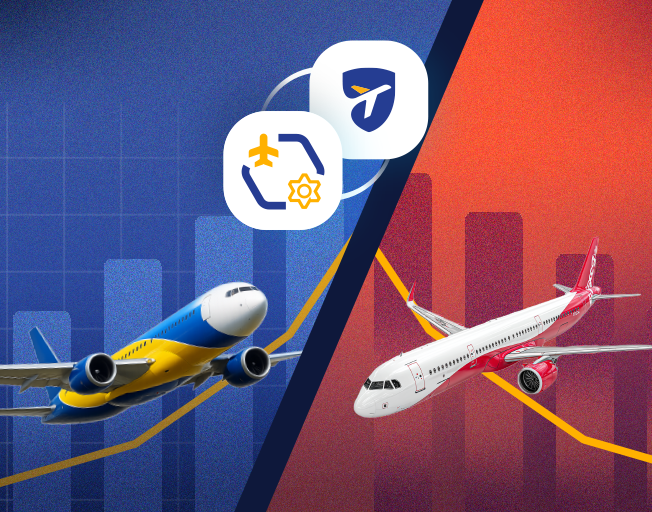
A tale of two operators
When the emergency software rollback directive hit Airbus fleets, it grounded thousands of A320-family aircraft worldwide — including ~120–160 for Operator A and ~90–110 for Operator B.
Fleetwide directives don’t give you time to prepare.
They expose your weak points instantly.
You can see it in the case study:
“The speed of your recovery is determined long before the event itself.”
When every grounded aircraft becomes an event, the real question is:
Do you have a system that can handle sudden volume — or one that collapses under it?
Operator A’s system held strong.
Operator B’s system cracked.
That’s not a reflection of effort — it’s a reflection of infrastructure.
Tips:
- Map your event flow from identification → triage → resolution → RTS.
- Identify weak links: email chains, siloed tools, manual updates.
- Build mass-event triggers for recalls, directives, and OEM bulletins.
How Operator A Recovered in Just 24–36 Hours
Operator A restored 85–90% of its grounded fleet within 36 hours — an almost unheard-of outcome during a fleetwide grounding.
How?
Not talent.
Not luck.
Not throwing more bodies at the problem.
They had a unified Tech Ops Collaboration Platform that gave them:
- A real-time view of every grounded aircraft
- Instant assignment and ownership clarity
- Progress tracking across every station
- Automated escalation when work stalled
- Shared context across Tech Ops, engineering, line maintenance, SOC, and OEM support
The case study states it clearly:
“Instead of chasing fragmented updates, every stakeholder worked off the same live picture.”
This is what real tech ops event management looks like.
It compresses time-to-awareness, time-to-decision, and time-to-return-to-service into a tighter loop.
That reduction turns crisis into inconvenience.
Tips:
- Build a single operational source of truth — no exceptions.
- Implement automated event workflows for software rollbacks and mass directives.
- Provide shared dashboards with aircraft status, blockers, and RTS timelines.
Why Operator B Spent 7–10 Days Recovering From the Same Problem
Operator B took 7–10 days to unwind its disruption and even paused ticket sales to steady its operation.
Their people weren’t the issue.
Their tools were.
Their response relied on:
- Messaging apps
- Phone calls
- Station-specific spreadsheets
This created operational drag on every level.
Because when information is scattered, decisions scatter too.
Multiple teams worked the same issue without knowing it.
Station updates lagged behind reality.
SOC used outdated inputs to replan the network.
Communication loops stretched from minutes to hours — from hours to days.
The case study doesn’t mince words:
“For Operator B, the problem wasn’t inadequate effort. It was inadequate alignment.”
Once that misalignment takes hold, everything slows:
Cancellations → Delays → Crew reassignments → Gate changes → Further disruptions.
And suddenly a one-day issue becomes a 10-day crisis.
Tips:
- Eliminate multi-channel communication for event coordination.
- Replace every spreadsheet with real-time event logs.
- Standardize escalation rules so nothing gets lost or repeated.
The Real Difference: Alignment Speed Determines Recovery Speed
Two airlines.
Same disruption.
Nine days apart in recovery time.
This wasn’t about hardware, geography, staffing, or luck.
It was about one foundational truth:
“Your team doesn’t rise to the occasion — they fall to the level of their systems.”
Operator A built systems designed for pressure.
Operator B built systems designed for routine operations.
When the pressure hit, the difference became obvious.
Operator A: clarity → speed → stability.
Operator B: confusion → delays → extended outage.
This is why tech ops event management isn’t a “nice to have.”
It’s the backbone of operational resiliency.
Tips:
- Build repeatable workflows for OEM bulletins and directives.
- Enable real-time context sharing between Tech Ops, line stations, engineering, and SOC.
- Run quarterly disruption simulations to see where your system cracks.
How Strong Event Management Compresses Disruption From Days to Hours
Operator A turned a full-fleet grounding into a 2-day disruption.
Operator B endured a 10-day operational crisis.
That’s the ROI of strong event management.
It compresses:
- Event intake
- Triaging
- Cross-team alignment
- Escalation
- Return-to-service timelines
And compression is everything.
Because the longer your operation spends in uncertainty, the worse the downstream effects become.
A good Tech Ops event management system prevents those compounding delays by giving teams the clarity, context, and control they need to move fast.
This is how the best airlines shrink multi-day disruptions into 24–48 hours of controlled recovery.
Tips:
- Categorize events by type to streamline triage.
- Provide RTS forecasts directly to SOC and network planning.
- Automate your two largest workload bottlenecks for immediate ROI.
What it all boiled down to
Two airlines.
Same aircraft.
Same directive.
Same solar radiation anomaly.
But one recovered in 36 hours, while the other spent 10 days wrestling with cascading delays and operational chaos.
The difference wasn’t effort — it was infrastructure.
It was alignment.
It was event management.
If your team is still coordinating critical events across email, spreadsheets, and ad-hoc calls, your recovery curve will always look more like Operator B’s.
But if you centralize workflows, give every stakeholder the same real-time context, and automate the coordination work that slows teams down, you’ll have the resiliency Operator A demonstrated when it mattered most.
Action Steps:
- Map your current event management workflow.
- Identify your alignment bottlenecks.
- Implement a unified system as your operational source of truth.
- Build playbooks for mass disruptions before you need them.
- Run simulations twice a year to measure improvement.
Want to understand where your airline sits on the 36-hour vs 10-day spectrum?
👉 Download the case study
Subscribe for updates

Every fact, every interaction, every choice and every voice. In one place.